

THE PORTUGUESE WATER DOG
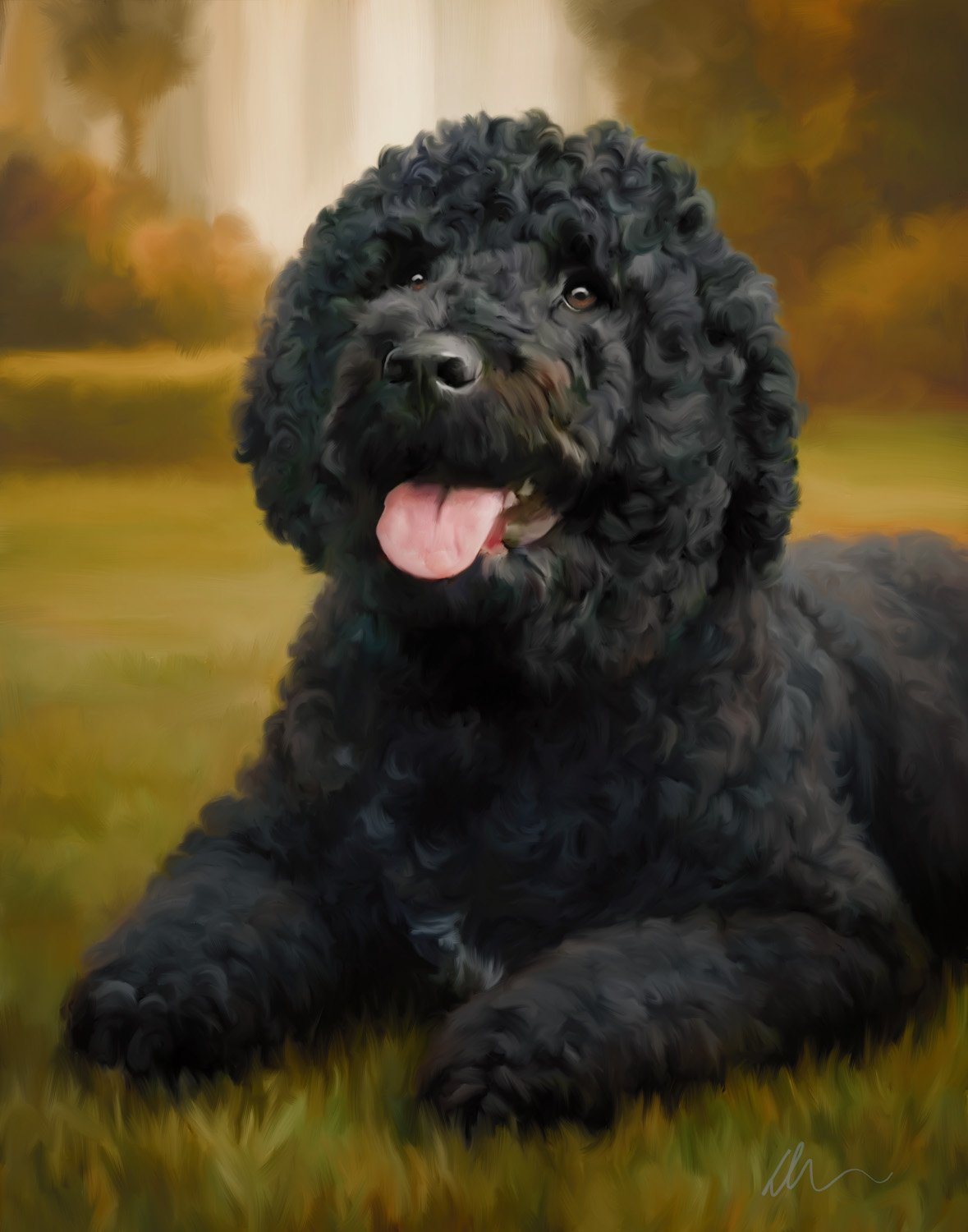
In Portugal, the breed is known as the Cão de Água, which simply means “dog of water.” It's also sometimes called the Portuguese Fishing Dog.
The breed’s exact origins are a little murky. Water dogs have worked throughout Europe for centuries, and the Portuguese Water Dog may share ancestors with breeds such as the Poodle and Irish Water Spaniel. The first known written description of a dog resembling the modern breed dates to 1297. A monk described a sailor being pulled from the sea by a dog whose appearance closely matched the breed we know today.
These dogs eventually became working members of fishing crews along the Portuguese coast. They retrieved lost tackle and broken nets, carried messages between boats or from boat to shore, and helped move fish toward waiting nets. They were strong swimmers capable of diving underwater, but this wasn’t just a dog along for the ride. They needed to understand several different jobs and perform them amid cold water, rough seas, and the general chaos of a working fishing boat. Some even traveled aboard boats from Portugal’s Atlantic coast to the fishing grounds near Iceland.
As fishing methods changed, many of those jobs disappeared. By the early 20th century, very few Portuguese Water Dogs were still working on boats, and the breed nearly disappeared along with the work.
During the 1930s, Portuguese businessman Vasco Bensaude began a breeding program centered on a fisherman’s dog named Leão. Leão became the model for the first written breed standard and the founding sire of the modern Portuguese Water Dog. The breed arrived in the United States in 1968 and was accepted for registration by the American Kennel Club in 1983.
Portuguese Water Dogs may have either a curly or wavy coat. They can be black, brown, white, or black or brown with white markings.
The traditional lion clip, with the muzzle and hindquarters closely trimmed and the front of the body left heavily coated, is a visible reminder of the breed’s working past. The more even retriever clip is also common today.
Portuguese Water Dogs are athletic, intelligent, energetic, and highly trainable. They weren’t bred simply to wait for instructions. A good fishing dog needed to work closely with people while also making decisions on its own. That produces a companion who learns very quickly, including things its people may not have intended to teach!
Modern Portuguese Water Dogs may no longer spend their days aboard fishing boats, but they still need physical exercise and something useful to do with their minds. Today they can be found competing in obedience, agility, scent work, and water trials, or working as therapy dogs.
For the painting, I wanted to work on a simpler presentation. This was painted to be a Storyscape Miniature with just a few brushstrokes giving the impression of the background. The background was specific to this particular dog, rather than the breed description. I might create another painting specific to the breed history at a later date.
If you'd like to commission a portrait of your own dog, you can find information about the process at pouka.com/commissions.